Commercial Waste in Shepperton

Commercial waste in Shepperton needs a practical, organised service that can deal with everyday business rubbish without disrupting work. We handle a wide mix of non-hazardous waste from offices, shops, hospitality premises, workshops and light industrial units, helping customers clear accumulated material and keep working areas usable. The focus is on safe collection, sensible sorting and clear communication, so the process stays straightforward from first enquiry to final removal.
Our service is built around the kinds of waste that businesses often produce over time: packaging, cardboard, mixed general rubbish, unwanted fixtures, broken furniture and surplus items from refits or routine tidy-ups. Not every load is the same, so the right approach depends on the material, access, volume and how quickly the premises need to be made ready again. Where helpful, we can also support customers with business waste removal, office waste removal and related clearance work across the local area.
For a quotation, send through a few details about the type of waste, the amount involved and the access to the property. If you already know what needs moving, that makes it easier to suggest the most suitable next step. If not, a simple description is enough to begin. Ask for a quote when you are ready and we will take it from there.
Business waste removal arranged around your premises
Business waste removal is rarely just a matter of lifting bags and driving away. Different premises produce different materials, and the way those materials are stored or stacked can change the collection method. Some customers need help after an office clear-out, while others want regular removal of mixed business rubbish that has built up in staff areas, stock rooms or storage corners. The aim is to remove waste efficiently while leaving the working environment as orderly as possible.
Commercial waste can include day-to-day refuse, packaging from incoming deliveries, obsolete paperwork ready for secure destruction, broken desks and chairs, shelving, counter units and other surplus items. In some settings, a phased approach is more suitable than trying to clear everything at once. We can discuss the load, the access route and any items that need to be handled separately so the collection is planned around what is actually there rather than around a generic template.
What a well-planned collection may include
- Removal of mixed business rubbish from offices, storerooms or back-of-house areas
- Collection of cardboard, packaging and other recyclable commercial material
- Clearance of desks, chairs, cabinets and other unwanted workplace furniture
- Support for move-outs, refits, stock changes and general tidying projects
Office clearances and workplace tidy-ups
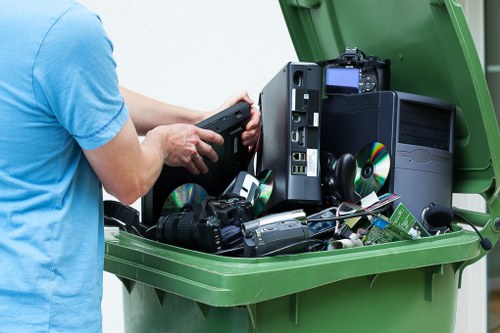
Office clearance work often involves more than a simple rubbish removal. A workplace may contain redundant filing, old monitors, office chairs, reception furniture, meeting room items and packaging left behind after deliveries or a refresh of the layout. Our approach is to separate useful, recyclable and general waste where possible, then remove what is no longer needed in a controlled way. This helps keep the space ready for staff, contractors or incoming equipment.
Different offices have different constraints. Some are occupied and need a tidy, staged collection with limited disturbance; others are emptying for relocation and can be cleared more quickly. In both cases, access, lift use, parking limitations and building rules may affect how the work is done. When you contact us, it helps to mention whether the site is a shared building, whether items are on upper floors and whether there are any restrictions on collection times.
If your premises need broader support, our service can also be combined with office clearance or linked with other removal work where items are mixed together. For businesses that are refreshing interiors, dealing with old furniture or preparing rooms for handover, clear communication before the visit makes the removal process simpler and easier to plan.
Furniture, fixtures and bulky items from commercial sites
Many commercial waste jobs include bulky items that are no longer needed but are awkward to move through a normal building. Office desks, reception counters, shelving, storage units and seating can all take up valuable space once they are obsolete. We can remove commercial furniture as part of a broader clearance or as a focused collection when the main task is simply to get large items out of the way. The practical question is usually not whether the items can be lifted, but how they can be moved safely from their current position.
When furniture is mixed with other rubbish, it is sensible to group the items before collection if that can be done easily. That makes it easier to judge the likely time, the access required and whether more than one type of disposal route may be needed. We also deal with related items such as cabinets, small fixtures and furnishings that form part of a workplace clear-out. Bulky waste often needs more planning than bagged rubbish, especially in buildings with tight corridors, stairways or shared entrances.
Our furniture removal work can sit alongside furniture clearance or, where the items are limited to waste rather than reusable stock, furniture disposal. That flexibility is useful when a premises manager is dealing with several categories of surplus material at once and wants one organised collection rather than multiple separate arrangements.
Recycling, sorting and responsible handling
A sensible commercial waste service should not treat every load as though it were identical. Some materials are suitable for recycling, while others need to be kept separate because they cannot be mixed safely with ordinary rubbish. Cardboard, office paper, some plastics, metals and certain fixtures may be routed differently from general waste, depending on the load. Our role is to handle the collection carefully and make sure the waste is sorted in a way that supports proper onward treatment.
For many businesses, this part of the service matters because the load is not just a one-off bundle of rubbish; it is a mix of items that came from several different activities. Packaging from deliveries, outdated stock containers, unwanted fittings and loose rubbish can all accumulate in one place. We can remove that mixture without forcing the customer to separate every item in advance, although sensible grouping often helps keep the process tidy. If you already know that your waste contains more specialised material, mention it early so the plan can account for it.
Simple ways to prepare a commercial collection
The most helpful information is usually practical rather than lengthy. A short description of the waste, approximate quantity and whether there are access issues is often enough to begin. If the items are on an upper floor, in a locked compound or behind a shared loading area, say so at the enquiry stage. If there are papers, confidential materials or appliances mixed into the load, identify them clearly rather than assuming they can be handled like general rubbish. That avoids delays and helps the collection stay well organised.
About Shepperton
Shepperton is a riverside settlement in Surrey, best known for its position beside the River Thames and for the mix of historic character and later development that shapes its built environment. The village grew from an older parish centre and retains traces of a long established community around its church, lanes and traditional high street. St Nicholas’ Church, with its medieval origins and later alterations, is one of the best known landmarks in the area, and the surrounding streets still reflect the layered history of a place that developed gradually rather than through one single period of expansion. The Thames path and local riverside views are part of everyday life here, linking the settlement to the wider chain of communities along the river.
Beyond the older core, Shepperton includes residential roads, local shops and open areas that show how the village has adapted to modern living while keeping a clear identity of its own. Nearby natural spaces and waterside routes contribute to the character of the place, and the town is also associated with film production through the presence of Shepperton Studios, one of the best known names in British cinema history. The result is a community that combines village-scale features with connections to wider cultural and transport networks. For visitors and residents alike, the appeal lies in that balance: a compact centre, river scenery, historic buildings and a strong sense of place that remains visible in the layout and landmarks of the area.
Hazardous or specialist waste needs careful handling
Some commercial waste should never be treated as ordinary rubbish. Items such as chemicals, certain cleaning products, oily residues, fluorescent tubes, batteries or other specialist material may require specific handling and disposal arrangements. Where hazardous waste is involved, the collection must be assessed on the basis of the actual items present, not on a guess about what might be acceptable. If your load contains anything that could be classed as specialist or regulated, say so plainly at the enquiry stage so the correct route can be discussed.
We do not assume that every business clearance will contain specialist material, and we do not treat it casually when it does appear. The aim is to separate the ordinary load from anything that needs a more controlled approach, then decide what can be taken together and what needs separate treatment. This matters in workshops, maintenance areas, storage rooms and some service businesses where waste builds up from varied activities. A clear description of the material is usually better than trying to simplify it.
For certain buildings, it can also help to plan the visit around access conditions, storage locations and who will be available to identify the items. Keep the explanation short and factual. If you are unsure whether something belongs in general waste or requires special handling, the safest approach is to mention it rather than leave it out. That allows the collection to be arranged with fewer surprises on the day.
Office and business paperwork, shredding and sensitive items
Commercial waste can include more than furniture and packaging. Many businesses also need help removing papers, folders and sensitive records that should not be left with ordinary rubbish. In those cases, secure handling becomes an important part of the plan. Depending on what you have, a collection may involve confidential shredding, careful segregation or removal of records with other office waste. The main point is that sensitive material should be identified clearly before collection so it is not mixed with non-sensitive items by mistake.
Workplaces often store information in several formats at once, so a clearance might include file boxes, loose paper, archive material and outdated office supplies. The collection method should reflect that mix. If the waste is spread across multiple rooms, try to note which items are important to keep separate and which can go with the general load. Clear labelling and a little prior sorting can make a noticeable difference in how smoothly the work proceeds, particularly in shared buildings or premises that are still open to staff and visitors.
Where appropriate, this service can sit alongside confidential shredding and broader office waste removal. That combination is useful for businesses clearing archives, closing down storage rooms or reducing accumulated paperwork without turning the process into a complicated series of separate arrangements.
Pricing factors and quotation details
Commercial waste pricing is normally shaped by the type of material, the overall volume, the ease of access and any need for separate handling. A load of bagged general waste is very different from a room full of desks, filing cabinets and mixed office equipment, so a realistic quotation depends on what is actually there. This is why a careful description is more useful than a one-line request. It helps match the collection to the work involved rather than assuming a standard pattern.
In practice, the best quotation information usually covers four things: what the waste is, roughly how much there is, where it is located and whether there are any constraints such as stairs, lifts, parking or restricted access. If there are bulky items mixed with smaller waste, say so. If the premises are occupied during business hours, say whether the collection needs to be timed around staff or customers. You do not need a long explanation, but a clear one is valuable.
To begin, send the basic details and ask for a quotation. If it is easier, a short description of the waste is enough to start the conversation. Request a quotation when you are ready, and we will respond with the next practical step rather than unnecessary complexity.
Waste from shops, workshops and mixed commercial premises
Commercial waste is not limited to office settings. Retail units, workshops, small warehouses and trade counters all produce material that eventually needs removing. Shops may have damaged display items, packaging and back-room rubbish; workshops may have offcuts, broken fittings and surplus consumables; mixed premises may have a combination of office waste and operational rubbish gathered in one place. Our service is designed to handle those everyday combinations without forcing the customer to split them into artificial categories first.
In these settings, the practical issue is often how the waste has been accumulated. Some items may be stacked in a yard, some stored inside and some left in customer-facing areas that need to be cleared quickly. A good plan takes account of what can be removed together and what needs to be staged. If there is equipment to work around, or if the premises have narrow access routes, that should be mentioned early. It helps set the collection up around the site rather than making the site fit the collection.
Typical decisions businesses make before collection
- Whether the waste is best removed as one mixed load or broken into separate piles
- Whether any items should be kept apart for recycling or specialist handling
- Whether the collection needs to happen while staff, customers or contractors are present
- Whether bulky items should be moved to one point or collected from several areas
Book a commercial waste collection
When commercial waste starts to take up usable space, it becomes easier to keep work moving once it is cleared properly. We can help with mixed rubbish, office furnishings, packaging, bulky fixtures and other unwanted material that businesses need removed in a controlled way. The service is intended to be straightforward: you identify the waste, describe the access and tell us what kind of collection you need, then we can discuss the most suitable arrangement.
If your premises are dealing with a one-off clear-out, a change of layout or a steady build-up of waste in storage and back-of-house areas, it is worth dealing with it before it spreads further. We also support customers who need related removal work such as business waste removal and other commercial clearances, which can help keep the whole process under one organised plan.
Send the details and ask for a quotation when you are ready. If the waste is straightforward, a brief summary is enough; if it is mixed or bulky, include whatever will help describe it properly. The goal is a sensible, practical collection that fits the premises and the material involved.